Economically Enhancing Old Pads for Modern Goaltending Styles
By
Your son or daughter’s first experiment in the crease can be scary for more than one reason. The pucks flying at your kid aren’t the only thing that can be daunting - the money flying at his equipment can be pricey.
Rentals and used gear can be the solution, but with the new style of modern goaltending being taught, beware. Knees and thigh punishment without knee lifts can be bad. Performance is also negatively affected. Profly (http://www.overdriveblade.com/profly.htm) slides are impossible to accomplish without pad rotation or a sliding surface. Profly is also referred to as the more generic but less accurate “butterfly[1]” term.
Rentals and old gear often lack the knee padding necessary to protect and perform. However, they can be retrofitted to suit new goaltending requirements, even if it’s temporary. Most old pads available economically predate profly style play but will work for the new styles with relative ease. They are missing one or two key pieces: knee wings/lifts, and toe bridge/straps
Knee Wings & Lifts
The knee wing allows the goalie to rotate the pads and land on the insides of the knee area of the goalie pads. Knee lifts (also known as knee stacks) are stacked like a layer cake between the knee and the wing to lift the knee off the ice.
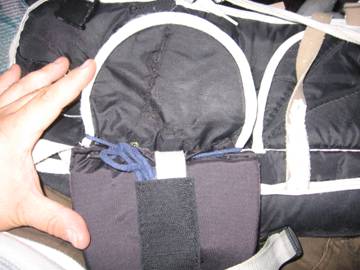
Figure 1: Knee-wing retrofitted on an Itech Profile 24" pad
Figure 1 is an example of a single aftermarket knee wing affixed to the inside knee area of an Itech profile 24” goalie pad. This pad was likely purchased cca 2001 and is typical of that available for rent in many local minor hockey associations.[2] The original knee “protection” flap is shown. It provides almost no cushion to the knee, and is insufficient to learn profly goaltending.
At the bottom of the figure 1, a makeshift knee-wing is shown. The flap is perforated with three or four 1/8” eyelets at the base of the flap just outside the stiching that attaches to the body of the goal pad. Eyelets can be found at Michael’s and are installed with a hammer and wood block.
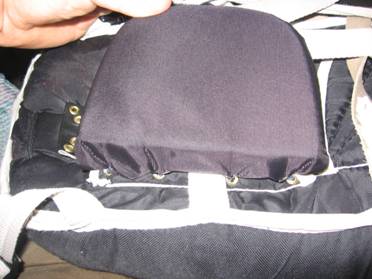
Figure 2: Knee wing landing surface shown.
The wing is laced into the pad as shown in figure two. They can be removed and reinstalled with the next set of pads the goaltender graduates to. Total cost – $22 for knee wings, 22 cents of eyelets, some old skate lace and some patience.
Toe Bridge
Pads should fit to the leg relatively loosely compared to the 80s and 90s. Many older pads use toe straps intended for this tight attachment of pads.
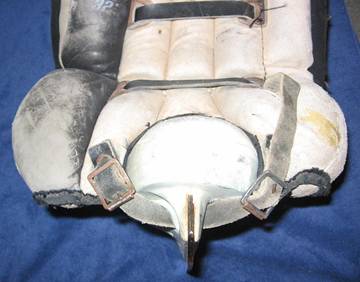
Figure 3: Cooper GP58L cca 1987 with old toe straps done
up tight
and “old-skool”.
Toe straps are still useful. They can be adjusted to suit the pad rotation if the strap is long enough.
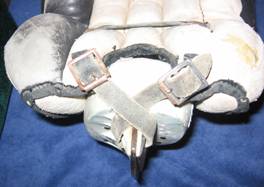
Figure 4: Toe straps done up correctly for
butterfly style of goaltending.
This allows the pad to clear out so the inner skate blade can be on the ice when using the power leg to push the puck-side leg around.
Newer pads have toe bridges with laces, and often toe caps (unless they are “box style”).
|
Figure 5: Toe bridge and lace from a Koho 590 |
Figure 6: Toe cap from a Koho 590 |
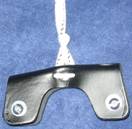
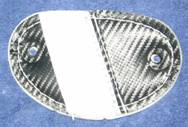
Below you can see that even the $1699 Koho 590 Pro pad (cca 2004) had a toe bridge and cap added on so that Koho avoided a total redesign of the toe area.
|
Figure 7: Koho 590 without cap and bridge |
Figure 8: Koho 590 with toe bridge and lace |
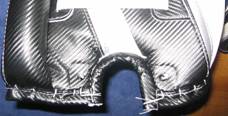
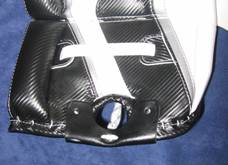
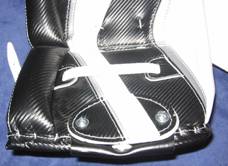
Figure 9: Fully assembled stock Koho 590
Any old pair of pads can be retrofitted with a bridge. The optional cap is cosmetic at young ages, but protective when the kids get older and master the big slapshot. Toe bridges are available for about $20 on ebay or local goalie stores.